

Cart
0
What Your Gemstone Really Means
Jewellery was a language long before it was an asset class. Kings went into battle wearing rubies for courage. Sailors carried aquamarine. In India the idea went furthest of all: the navratna assigns nine gems to nine celestial bodies, so that a single ring becomes a small, wearable cosmology. Most of our clients at Firuzeh Jaipur don't buy stones for these reasons, at least not openly. But almost everyone, once the subject comes up, wants to know what their stone is supposed to mean.
Emerald
The green stone has stood for renewal and clear thinking in nearly every culture that valued it. Vedic tradition assigns it to Mercury, the planet of intellect and speech, which made it the stone of scholars and negotiators. Cleopatra controlled Egypt's emerald mines personally and gave the stones as diplomatic gifts, which tells you she understood the symbolism better than most. If there's a stone for beginnings, this is it.
Ruby
The Sanskrit name is ratnaraj — king of gems — and the associations have always been with vitality and nerve. Burmese soldiers were said to carry rubies into combat believing the stones made them unkillable, which was optimistic, but the underlying idea survives: a ruby is not a shy stone, and people who wear them tend not to be shy people.
Sapphire
Blue has meant fidelity since at least medieval Europe, which is why sapphires have guarded so many famous engagement rings. The navratna system links the stone to Saturn, the slow teacher among the planets, the one associated with discipline and things earned rather than given. A stone of promises kept, in other words. It suits the people it suits very exactly.
Pearl
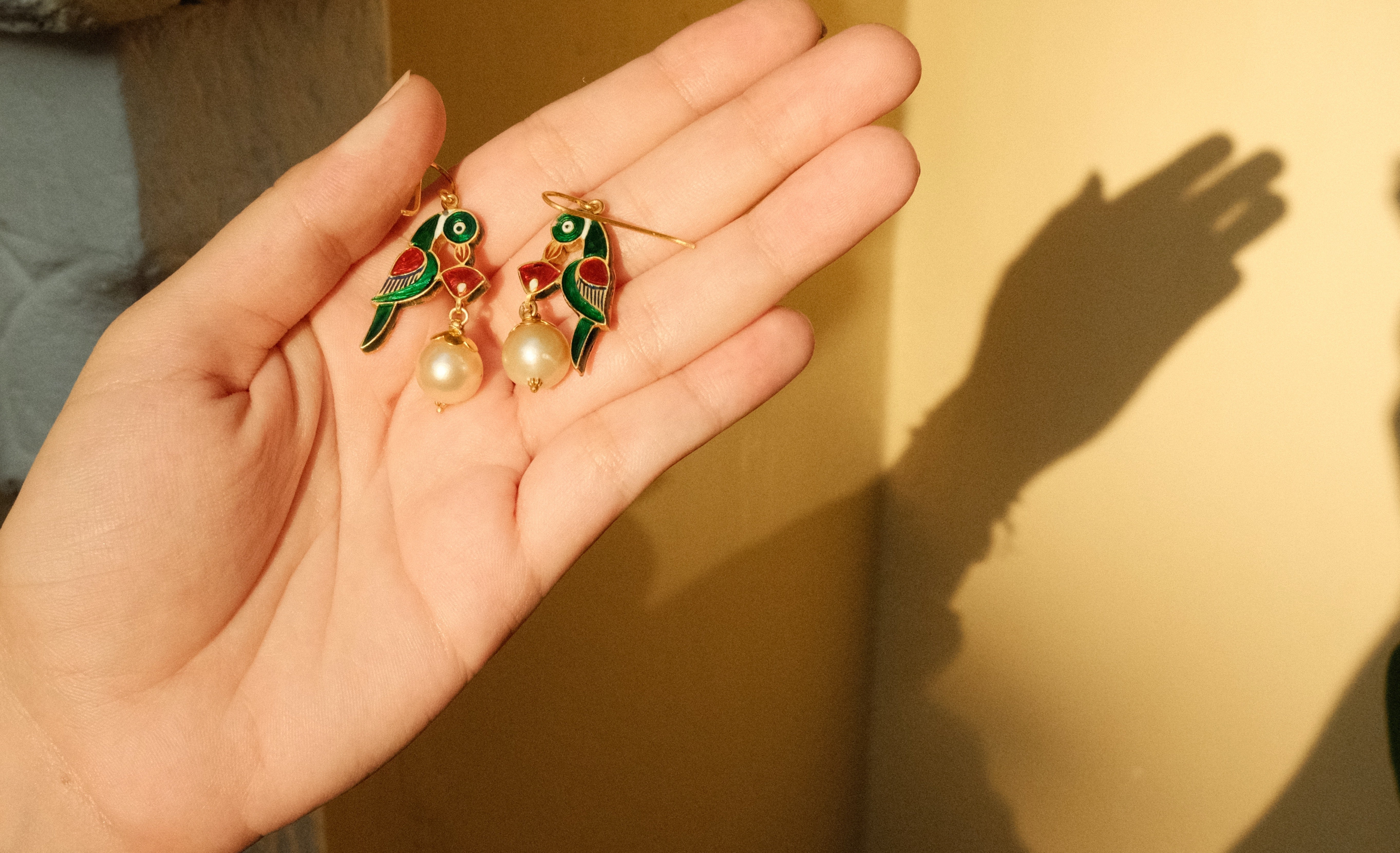
The only gem made by a living thing, and the gentlest of the lot. Indian tradition gives the pearl to the moon and credits it with calming the mind of the wearer. Whatever one makes of that, pearls do something visibly quieting in a piece of jewellery; a strand against emeralds — a very Jaipur combination — settles the whole composition down.
How to Choose, Honestly
We're sometimes asked whether one should choose by birthstone, by astrology, or by instinct — and our answer disappoints the astrologers: instinct, almost every time. The stone your eye keeps returning to in a tray of twenty is telling you something, and it's rarely wrong. The frameworks are beautiful and worth knowing. But the oldest rule of the trade still holds, and every dealer in Johari Bazaar will tell you the same: the right stone chooses you.

