Cart
0

There's a reason the maangtika is one of the most recognisable pieces in Indian bridal jewellery. Worn at the centre of the forehead, it does more to complete a bridal look than almost any other single piece. But maangtikas have moved well past weddings in recent years, showing up at festive events, receptions, and styled shoots as a statement piece in their own right.
What Is a Maangtika?
A maangtika, sometimes spelled maang tikka, is worn along the centre parting of the hair, with a chain or ornament resting on the forehead and a pendant hanging just above the hairline. It has deep roots in Indian bridal custom, though modern versions range from minimal and delicate to elaborate and gemstone-studded.
Beyond its beauty, the maangtika carries meaning. Worn along the hair parting, it is traditionally linked to the third eye, or sixth chakra, and is seen as a symbol of blessing and feminine strength in many wedding traditions. Most modern buyers choose one simply for how beautifully it frames the face, but that heritage is part of why it still feels special.
Types of Maangtika
- Single-strand tikka: the classic centre-parting style with a single pendant drop.
- Passa (jhoomar): worn on the side of the head and associated with Mughal bridal traditions.
- Mathapatti: a fuller headpiece that extends across the forehead.
- Sheeshphool: a floral cluster worn on the side, popular in Rajasthani bridal looks.
How to Choose a Maangtika for Your Face Shape
Like earrings, a maangtika interacts directly with the shape of your face. Rounder faces often benefit from a longer, more angular pendant, which helps elongate the overall look. Longer or narrower faces tend to suit a wider, more rounded pendant, which softens the proportions. A smaller forehead generally pairs better with a compact design, since a very large pendant can look disproportionate, while a larger or more open forehead can carry a more elaborate maangtika without it feeling out of place. If you have fringe or front layers, a delicate chain-style tikka sits better against layered hair than a heavy, structured one.
How to Choose a Maangtika Based on Your Outfit
- Red or maroon lehenga: a polki or ruby-set tikka in gold.
- Ivory or champagne lehenga: a pearl or diamond tikka for an ethereal effect.
- Green lehenga: an emerald tikka for a tonal, maximalist look.
- Pink or blush lehenga: a tourmaline or pink sapphire tikka.
Best Hairstyles to Wear With a Maangtika
Placement depends heavily on how your hair is styled, so it helps to settle on the hairstyle before finalising the piece. Centre-parted hair is the classic pairing, letting the chain sit naturally along the parting. Updos and buns create a clean, uninterrupted line, making them a strong option for more elaborate designs. Half-up styles work too, though the maangtika should generally go in before any hair accessories, to keep the chain from shifting through the event. Most jewellers recommend having it professionally pinned rather than relying on the chain alone, especially for longer or heavier pieces.
Pairing a Maangtika With the Rest of Your Jewellery
Because the maangtika sits at the centre of the face, it naturally draws the eye, which means the rest of your jewellery should support it rather than compete with it. If the maangtika is heavily detailed or gemstone-studded, keep the earrings simpler and the necklace more understated. If it's more delicate, you have room to layer in a statement necklace or bolder earrings. A statement mathapatti works best with simple earrings, while a classic single-strand tikka pairs beautifully with elaborate jhumkas and a layered necklace. Matching metals, gold with gold, silver with silver, tends to create a more cohesive look, though intentional contrast can work well in more contemporary styling.
How to Wear a Maangtika Beyond Weddings
Maangtikas have found their way into sangeet, mehendi, and other festive event styling, not just wedding ceremonies themselves. For these occasions, a smaller, more playful maangtika, sometimes worn slightly off-centre rather than perfectly centred, has become a popular way to bring in the piece without it reading as strictly bridal. For Diwali or a family puja, a smaller polki or pearl tikka pairs easily with a saree or lehenga without looking like full bridal jewellery. Some clients also wear a tikka as a standalone pendant on a chain, a practical way to get more use out of a piece that might otherwise only come out once a year.
How to Choose a High-Quality Maangtika
Given how visible a maangtika stays throughout an entire event, the craftsmanship of the setting matters. Look for secure stone-setting, a well-balanced chain length, and a pendant weight that won't feel heavy after a few hours: details that are easy to miss in photos but very noticeable in person.
Firuzeh's Maangtika Collection
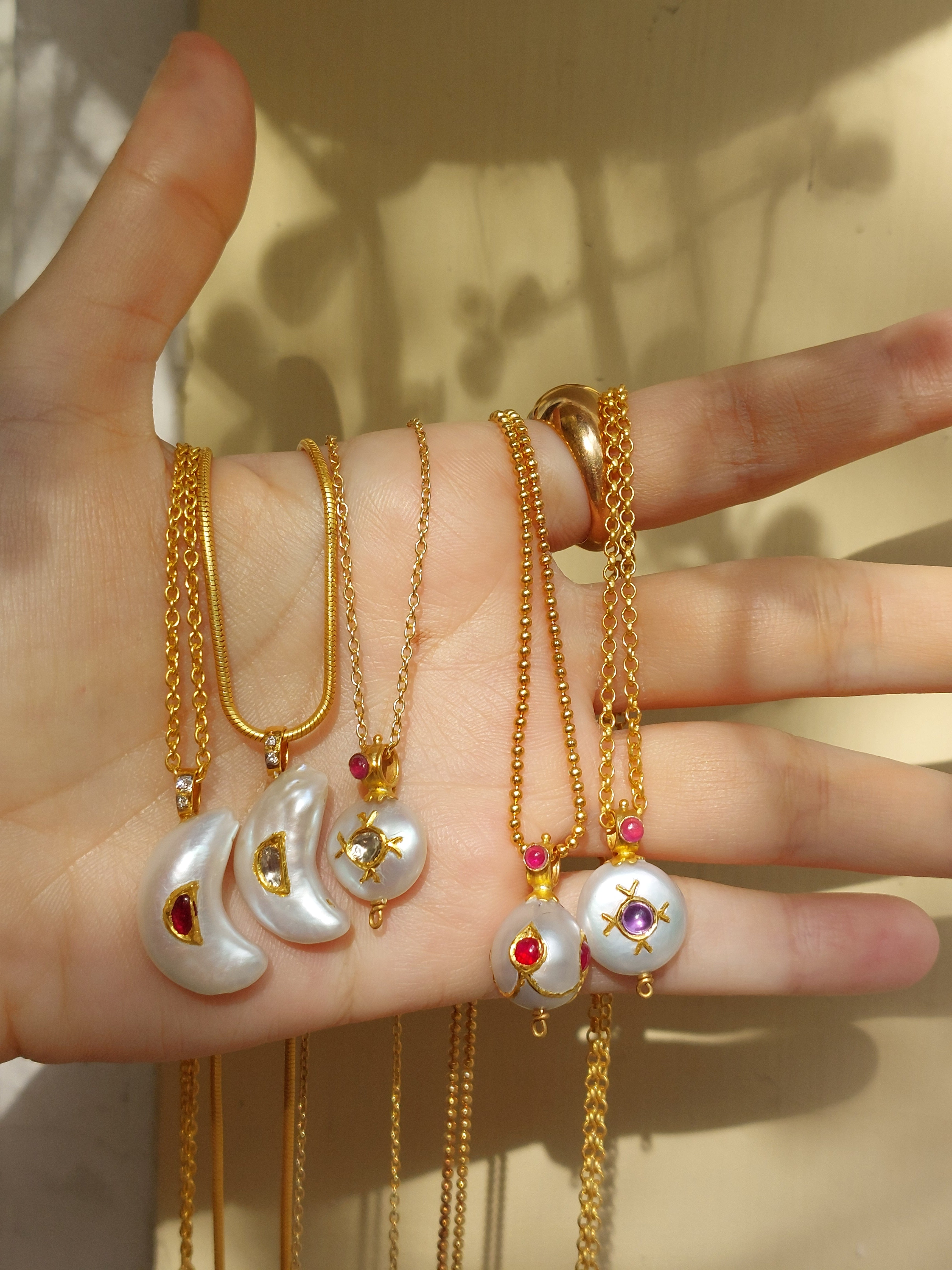
The Pearl & Diamond Polki Tikka Set is among our most loved bridal pieces, pairing pearls with uncut polki diamonds in a gold setting that photographs well against both light and dark outfits. The Tourmaline & Polki Diamond Pearl Tikka brings pink-green colour for the bride who wants it, and the Emerald & Diamond Pearl Tikka suits green-toned outfits.
Explore Firuzeh's maangtika collection, handcrafted in gold and silver with polki, pearls, and fine gemstones, made in our Jaipur atelier.